
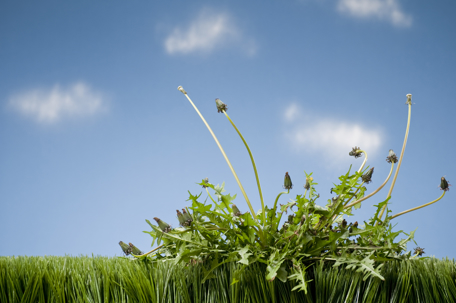
Most homeowners view weeds as random invaders that appear out of nowhere to ruin a perfectly green lawn. However, weeds are actually biological indicators telling a story about what is happening beneath the surface of your yard. In the world of Texas lawn care, weeds aren't just the problem—they are often a symptom of poor soil health. When your soil is out of balance, it creates a welcoming environment for unwanted plants while making it harder for your grass to survive.
Why Weeds Love Unhealthy Soil
Plants have specific preferences for where they grow, and many weeds thrive in conditions that would kill high-quality turf grass. If your soil is too packed down, lacks the right nutrients, or has the wrong acidity levels, your grass will struggle and thin out. This creates open spaces in the lawn where opportunistic weeds can move in and take over. Instead of seeing weeds as an enemy to be pulled, it is more helpful to see them as nature's way of covering bare, unhealthy ground.
Different soil problems attract different types of weeds. By looking at what is growing in your yard, you can often diagnose what is wrong with the dirt itself. Identifying these patterns is the first step in fixing the root cause of the issue:
- Compacted soil: Hard, tight soil makes it difficult for grass roots to breathe, but weeds with tough taproots, like dandelions, can punch right through it.
- Low nitrogen levels: If your soil is starved of nutrients, clover and other legumes often appear because they can actually pull nitrogen from the air.
- Poor drainage: Wet, soggy areas are the primary breeding ground for sedges and certain types of crabgrass that love wet feet.
The Compaction Connection
In many parts of Texas, heavy clay soil is a common challenge. Over time, foot traffic, lawn mowers, and even heavy rains can press the soil particles together, a process known as compaction. When soil is compacted, it loses the tiny air pockets that grass roots need to absorb oxygen and water. This essentially suffocates your lawn, causing it to go dormant or die back.
Weeds, however, are remarkably resilient. Many have evolved to thrive in high-traffic, low-oxygen environments where grass cannot compete. When you see weeds like goosegrass or knotweed growing in the middle of a hard-packed path, it is a clear sign that the soil is too dense. Simply treating the weed won't help for long because the soil conditions still favor the weed over the grass.
Technical correction of soil density is often achieved through core aeration, a process that physically removes small plugs of soil from the turf. This mechanical intervention creates pathways for oxygen, water, and nutrients to directly penetrate the root zone. By reducing soil resistance, aeration allows grass roots to expand and thicken, naturally increasing the lawn's ability to outcompete opportunistic weeds. Integrating this service into a seasonal maintenance plan addresses the structural cause of weed proliferation rather than focusing solely on surface treatments.
Balancing Nutrients to Starve the Weeds
Think of your soil like a pantry for your lawn. If the pantry is empty or filled with the wrong items, your grass will be weak and malnourished. Healthy soil needs a specific balance of macronutrients—nitrogen, phosphorus, and potassium—to keep turf thick and competitive. A thick lawn is the most effective weed deterrent because it shades the soil, preventing weed seeds from getting the sunlight they need to germinate.
When the nutrient balance is off, the "vacancy sign" goes up for weeds. For example, some weeds prefer highly acidic soil, while others prefer soil that is too alkaline. If you don't address the chemical balance of the soil, you will be stuck in a cycle of applying weed killer without ever seeing a permanent improvement in the thickness of your grass.
Improving the pantry involves more than just dumping random bags of store-bought products on the lawn. It requires a thoughtful approach to feeding the soil:
- Consistent feeding: Regular applications of high-quality food keep the grass strong enough to crowd out invaders naturally.
- Targeted minerals: Adjusting the soil chemistry ensures that the environment is "pro-grass" and "anti-weed."
- Organic matter: Encouraging healthy microbial activity in the soil helps break down thatch and improve nutrient uptake.
Breaking the Cycle of Weed Growth
The secret to a beautiful lawn isn't just killing weeds; it's making the soil so healthy that weeds don't want to live there. This requires a shift in perspective from treating the leaf to treating the land. By focusing on the environment where the grass grows, you create a sustainable system that allows the turf to defend itself against Texas heat and common pests.
Consistent care is the only way to reverse years of soil neglect. While it may take time to rebuild the soil's structure, the results are much more long-lasting than a quick fix. A healthy soil profile leads to deeper roots, better drought resistance, and a natural reduction in the need for weed control over time.
To truly break the cycle, consider these foundational habits:
- Aerate regularly: Opening up the soil allows water and air to reach the root zone, directly fighting compaction.
- Monitor moisture: Consistent, deep watering encourages deep root growth, which stabilizes the soil.
- Professional assessment: Having experts look at your yard can identify specific soil deficiencies that are unique to your local Texas area.
Restoring Balance to Your Texas Property
Achieving a lush, green lawn starts with acknowledging that the dirt beneath your feet is a living ecosystem. When the soil is neglected, weeds act as a signal that the environment has become unbalanced. By shifting the focus toward soil health, you are not just clearing away unwanted plants; you are building a foundation for a lawn that stays healthy and resilient through every season.
Perm-O-Green understands the nuanced expertise required to manage Texas turf and soil. Our 7-application program is designed to provide consistent fertilization and weed control that builds soil health from the ground up. Through specialized services, like aeration and vegetation control, we address the specific technical needs of your property to ensure your lawn has the strength to outcompete even the most stubborn weeds.
Stop fighting the symptoms and start healing your soil for a naturally beautiful yard. Reach out to Perm-O-Green to set up your professional lawn care plan! Reach us through this form, or call us at (800) 903-1460 to get started.